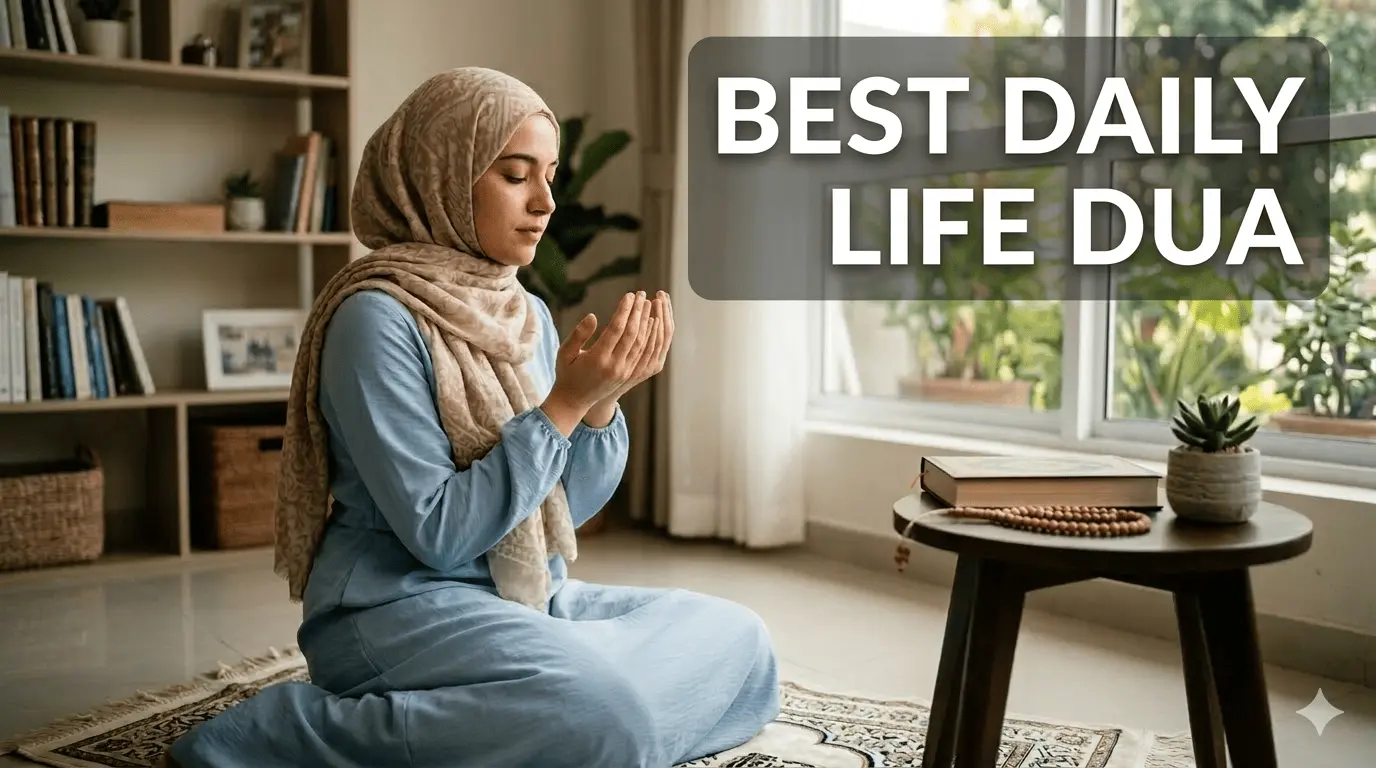
Dua (دُعَاء) — supplication — is one of the most profound acts of worship in Islam. It is a direct, unmediated conversation between the servant and Allah ﷻ. No intermediary is required, no appointment is necessary, and no moment is too trivial. The Prophet Muhammad ﷺ declared:
"Dua is worship."
— Sunan Ibn Majah, 3828For Muslims living in the United Kingdom and across the world, weaving authentic Prophetic duas into the fabric of daily life transforms ordinary moments — waking up, eating, travelling, sleeping — into acts of continuous ibadah (worship). This comprehensive guide presents the best duas for daily life, drawn exclusively from the Quran and authenticated Sunnah, complete with Arabic text, transliteration, and English translation.
Whether you are new to the practice of daily dhikr or wish to deepen your existing routine, this guide is designed to be both accessible and scholarly — a trusted companion for every Muslim household.
Why Are Daily Duas So Important in Islam?
The Arabic word dua comes from the root da'a (دعا), meaning to call upon or to invoke. Unlike the five obligatory prayers (Salah), dua is boundless — it can be made at any time, in any place, and in any state. Allah ﷻ says in the Quran:
"And your Lord says: 'Call upon Me; I will respond to you.'"
— Surah Ghafir (40:60)The companions of the Prophet ﷺ understood dua not as a last resort in moments of desperation, but as a daily discipline — a spiritual armour worn from the moment one opens their eyes until sleep. The Prophet ﷺ himself had a specific dua for virtually every act of daily life, and this Sunnah forms the backbone of this guide.
Among the key benefits of maintaining a daily dua routine are: attaining the pleasure of Allah ﷻ, protection from Shaytaan and harm, cultivating gratitude and tawakkul (trust in Allah), bringing barakah (blessings) into one's home, livelihood, and relationships, and strengthening iman (faith) throughout the day.
Morning Duas (Adhkar Al-Sabah)
Beginning the day in the remembrance of Allah ﷻ is among the most beloved acts a believer can perform. The morning adhkar set an intention of gratitude and serve as a spiritual shield for the hours ahead.
Dua Upon Waking
The Prophet ﷺ would recite this supplication immediately upon waking, acknowledging the gift of another day:
This dua is a profound reminder that sleep itself is a minor death — and each morning is a rehearsal for the resurrection. Reciting it daily instils an awareness of mortality and gratitude for the gift of life. On blessed mornings such as the day of Eid al-Fitr, reciting this dua carries an even deeper sense of joy and thankfulness for completing the blessed month of Ramadan.
Dua for Protection in the Morning
The Prophet ﷺ taught his companions to seek Allah's protection every morning with the following supplication, reported to grant all-encompassing protection:
Dua for Leaving the Home
In the hustle of modern British life — commuting, school runs, and work — stepping out of the home is a moment most people take for granted. Yet the Prophet ﷺ taught a supplication that, when recited sincerely, is reported to have the angels proclaiming: "You shall be guided, protected, and Shaytaan shall be kept away from you."
This supplication embodies the Islamic principle of tawakkul — complete reliance upon Allah whilst taking all necessary worldly precautions. It is a dua of extraordinary spiritual and psychological power.
Dua for Entering the Home
Returning home is a moment of sanctuary and safety. The Prophet ﷺ encouraged Muslims to mark this transition with remembrance of Allah, inviting His blessings and protection upon the household:
Duas Before and After Eating
Food is one of the greatest blessings of Allah ﷻ. Remembering Him before eating is a Prophetic Sunnah that transforms every meal into an act of worship — and protects the food from Shaytaan.
Before Eating
If one forgets to say Bismillah at the beginning of the meal, the Prophet ﷺ taught the following correction:
After Eating
Dua for Travelling
Whether commuting by tube in London or embarking on a long motorway journey, the Islamic etiquette of travel begins with dua. The Prophet ﷺ recited this supplication from Surah Az-Zukhruf when mounting any conveyance:
This dua is remarkable in its scope. From a car to a bus, from a bicycle to an aeroplane — all means of transport are encompassed by this Quranic verse.
Duas for Anxiety, Worry, and Distress
Mental health challenges are a reality for millions of Muslims in the UK. Islam does not dismiss the human experience of anxiety, grief, or hardship — it provides authentic spiritual remedies rooted in the Quran and Sunnah. The following duas were taught by the Prophet ﷺ specifically for moments of distress.
The Dua of the Distressed (Dua Karb)
In Sahih Al-Bukhari and Sahih Muslim, it is reported that the Prophet ﷺ would recite the following when distressed — a dua that combines absolute tawakkul with the declaration of Allah's supreme sovereignty:
Dua for Relief from Grief and Sadness
The Prophet ﷺ taught this comprehensive dua to ward off grief, anxiety, laziness, and financial hardship. It remains one of the most widely recommended morning and evening supplications:
Sayyid Al-Istighfar — The Master of Seeking Forgiveness
The Prophet ﷺ declared this to be the greatest dua of seeking forgiveness (istighfar). He stated that whoever recites it with full conviction in the morning and passes away before evening, or recites it in the evening and passes away before morning, will enter Paradise.
The Most Comprehensive Dua — Good in This World and the Next
Among all the duas a believer can memorise, the scholars of Islam regard this Quranic supplication as one of the most comprehensive and beloved. It asks for goodness in both realms simultaneously — an aspiration that lies at the heart of the Islamic worldview:
Imam Ibn Kathir noted that this single ayah encompasses all that a believer could ever desire — health, provision, family, righteous deeds, a good death, forgiveness, and the highest ranks of Paradise.
Evening and Bedtime Duas
Just as the morning begins with Allah ﷻ, so the night should end with His remembrance. The Prophet ﷺ had a consistent bedtime routine of dhikr and dua, teaching his family and companions to do the same.
Dua Before Sleeping
Dua for Protection During Sleep — Ayat Al-Kursi
The Prophet ﷺ informed his companion Abu Hurayrah ؓ that whoever recites Ayat Al-Kursi before sleeping, Allah appoints an angel to protect them through the night. It remains the most powerful verse in the entire Quran:
Duas for Parents, Family, and Children
Islam places exceptional emphasis on maintaining ties of kinship (silat ar-rahm) and honouring parents. These duas from the Quran and Sunnah are particularly beloved for those with family on their hearts:
Dua for Parents
Dua for Righteous Offspring
Dua for Knowledge, Provision, and Accepted Deeds
This short yet profoundly beautiful dua, reported to have been recited by the Prophet ﷺ after Fajr prayer, brings together three of the greatest needs of a believer in this worldly life:
This dua is particularly relevant for students, professionals, and anyone seeking clarity of purpose. It acknowledges that knowledge without benefit, provision without purity, and deeds without acceptance are all incomplete.
How to Build a Daily Dua Routine
The scholars advise that incorporating daily duas is best done gradually, one supplication at a time. Begin by memorising the dua upon waking and the dua before sleeping — these two bookend your day with the remembrance of Allah and require only a few seconds each.
Once these are established, add the duas for leaving and entering the home. From there, layer in the morning protection dua and Sayyid Al-Istighfar as part of your post-Fajr adhkar. Over weeks and months, each dua becomes second nature — a reflex of the heart rather than a burden on the mind.
The Prophet ﷺ said: "The most beloved deed to Allah is the most regular and constant even if it were little." — (Sahih Al-Bukhari, 6465)
Frequently Asked Questions
What is the best dua for daily life?
The best dua for daily life is Rabbana Aatina Fid-Dunya Hasanatan (Surah Al-Baqarah, 2:201), as it asks Allah ﷻ for goodness in this world and the Hereafter simultaneously. Scholars regard it as the most comprehensive supplication a Muslim can recite daily, encompassing health, provision, righteous deeds, and protection from the Fire.
Which dua should I read every morning?
The Prophet ﷺ recommended reciting "Alhamdu lillaahil-ladhee ahyaanaa ba'da maa amaatanaa" upon waking, and "Allaahumma bika asbahnaa" for morning protection. Both are authenticated in Sahih Al-Bukhari and Sunan Abu Dawood and take only seconds to recite, making them ideal anchors for a morning dhikr routine.
What dua do you say before leaving the house?
Before leaving the home, recite: "Bismillaah, tawakkaltu 'alallaah, wa laa hawla wa laa quwwata illaa billaah." The Prophet ﷺ taught that whoever recites this will be guided, protected, and shielded from Shaytaan — with the angels proclaiming your safety (Sunan Abu Dawood, 5095).
What is Sayyid Al-Istighfar?
Sayyid Al-Istighfar is the master supplication for seeking forgiveness in Islam. The Prophet ﷺ stated in Sahih Al-Bukhari (6306) that whoever recites it with full conviction in the morning or evening and passes away that same day or night will enter Paradise. It is one of the most powerful and rewarding duas a Muslim can memorise.
How do I build a daily dua routine?
Start with just two duas — the dua upon waking and the dua before sleeping. Once these become habit, gradually add the duas for leaving home, entering home, and before eating. The Prophet ﷺ said the most beloved deeds to Allah ﷻ are those done consistently, even if small (Sahih Al-Bukhari, 6465). Consistency matters far more than quantity.
Are these duas authentic and from the Quran and Sunnah?
Yes. Every dua in this guide is sourced exclusively from the Quran or authenticated hadith collections — including Sahih Al-Bukhari, Sahih Muslim, Sunan Abu Dawood, Sunan At-Tirmidhi, and Sunan Ibn Majah. These are the most trusted primary sources in Islamic scholarship, and all reference numbers are provided for independent verification.
Conclusion
The duas compiled in this guide represent a distillation of the finest Prophetic supplications for daily life — each rooted in the Quran and authenticated Sunnah, each carrying centuries of scholarly endorsement and lived Muslim experience. From the first breath of the morning to the last moment before sleep, Islam offers a complete vocabulary of worship that embraces every human experience.
For Muslim communities in the United Kingdom and beyond, these daily duas are not merely rituals but a living connection to the Prophet Muhammad ﷺ — a spiritual inheritance that bridges the gap between the sacred and the everyday. In a world of increasing noise and distraction, the gentle discipline of daily dua is a radical act of remembrance, a return to the One who is always listening. As special occasions such as Eid al-Fitr 2026 approach, these duas become even more meaningful — a reminder that every day, not just days of celebration, is an opportunity for worship and gratitude.
"And when My servants ask you concerning Me — indeed I am near. I respond to the invocation of the supplicant when he calls upon Me."
— Surah Al-Baqarah (2:186)May Allah ﷻ accept our duas, keep our tongues moist with His remembrance, and make us among those who are beloved to Him. Ameen.
All hadith references have been cross-checked with primary Islamic sources including Sahih Al-Bukhari, Sahih Muslim, Sunan Abu Dawood, Sunan At-Tirmidhi, and Sunan Ibn Majah.